
Healthcare Data Analytics
Peabody Health Philanthropies
Clinical Data Analysis · E-Patient Platform · Developing Nations
Peabody Health Philanthropies is a global health organization focused on improving healthcare quality, operational efficiency, and clinical standards in resource-constrained environments. From Fall 2024 through Spring 2025, I worked as Assistant Project Coordinator and Data Analyst, analyzing large clinical datasets collected from hospitals and healthcare programs across developing nations. The central objective was to turn fragmented, imperfect real-world clinical data into actionable insight — evaluating where care quality gaps existed, identifying workflow inefficiencies, and supporting the deployment of a platform designed to bring consistency and accountability to healthcare systems that often had neither.
The data itself was the first challenge. Clinical datasets from hospitals operating across different countries, reporting practices, and resource levels are rarely clean or standardized — they reflect the underlying complexity of the systems that produced them. Missing fields, inconsistent documentation, and cross-facility variation meant that every analysis required careful cleaning, structural interpretation, and contextual judgment before any insight could be extracted. This wasn't data analysis in an idealized environment. The messiness of the data was itself a signal about the quality of the systems generating it.
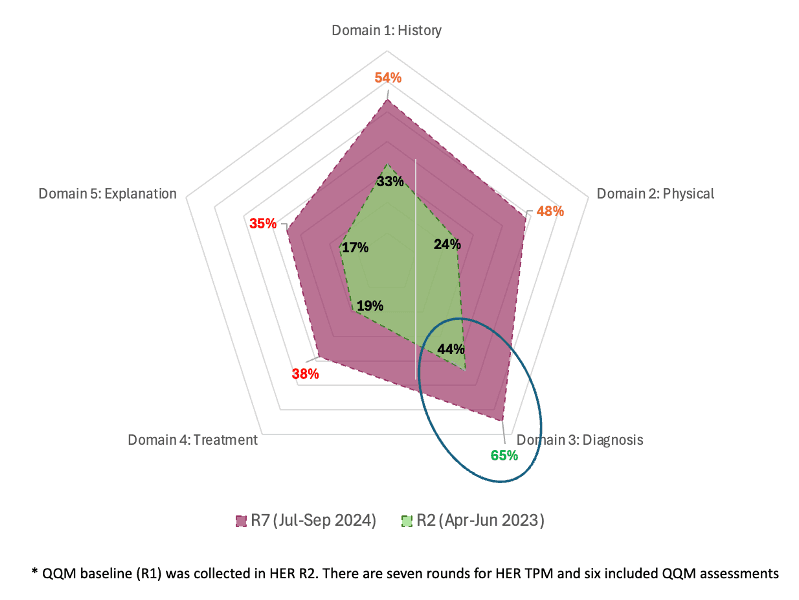
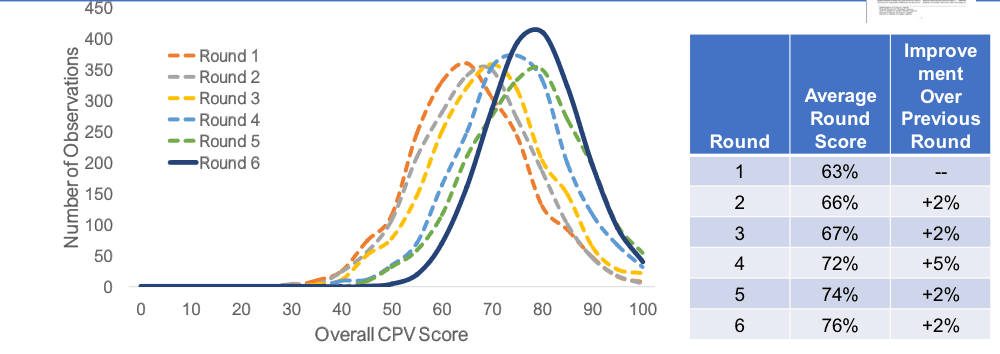
Using R, I developed analytical reports and dashboards that evaluated clinical performance, healthcare workflow adherence, and quality-of-care indicators across hospital settings. These reports were used by healthcare leaders to assess where standards were being followed, where documentation and workflow gaps existed, and where targeted improvements could produce measurable gains. The work fed directly into the deployment and evaluation of the E-Patient Quality Improvement and Standardization platform — a feedback loop connecting data analysis to iterative clinical improvement. Following deployment, clinical evaluation scores improved by 13% overall, with incremental gains of 2–5% per evaluation round.
The Problem
01
Healthcare Quality in Developing Nations
In healthcare systems operating with limited resources, inconsistent infrastructure, and uneven staffing, the challenge is not only whether care is being provided — it is whether care is being delivered consistently, documented accurately, and improved systematically. Without structured measurement, quality gaps persist invisibly, unable to be targeted or corrected.
02
Fragmented & Imperfect Clinical Data
Hospitals across developing nations rarely produce standardized data. Different countries, facilities, and reporting practices generate information that is inconsistent, incomplete, and difficult to compare across sites. Extracting meaningful insight requires more than analysis — it requires structural interpretation of what the data’s own flaws reveal about the systems producing it.
03
No Systematic Feedback Loop
Without a mechanism to measure quality, track improvement over time, and communicate findings back to clinical teams, healthcare administrators cannot know whether initiatives are working. The absence of a structured evaluation cycle is itself a quality problem — and the one the E-Patient platform and supporting analysis was designed to close.
Technical Breakdown
Four domains of analytical work — from raw data ingestion through dashboard development and platform-integrated feedback cycles.
01
Clinical Data Analysis
Analyzed healthcare data from hospitals across developing nations to identify patterns, inconsistencies, and inefficiencies in clinical operations — examining how care was delivered, how patient information was recorded, and how well hospitals were meeting established quality-of-care standards. The goal was to transform raw clinical data into usable evidence: understanding where systems were succeeding, where they were falling short, and what changes could lead to better outcomes. This required extensive cleaning and validation, treating missing information and inconsistent documentation as evidence of system-level issues rather than simply noise to be removed.
02
Quality-of-Care Evaluation
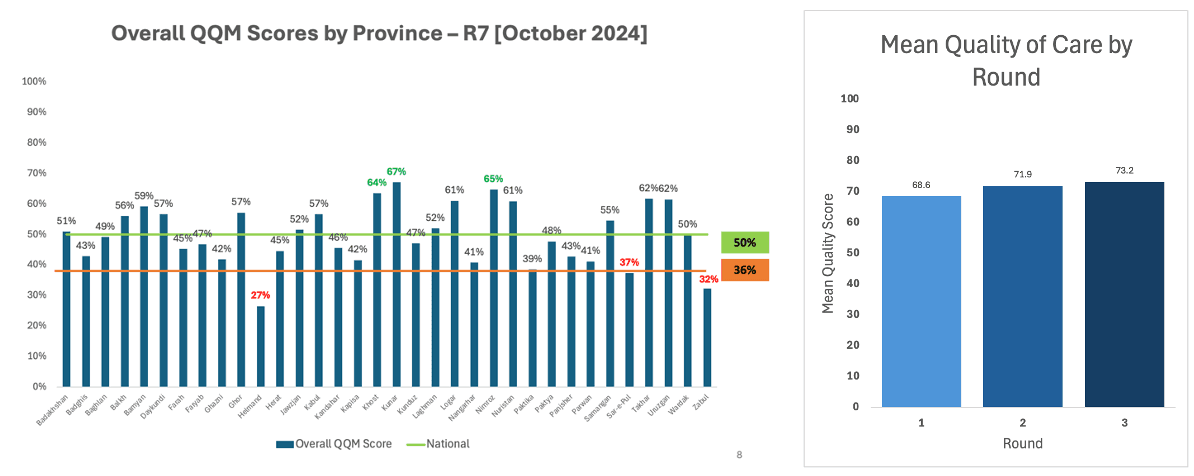
Evaluated whether clinical practices aligned with expected care standards and whether improvements were occurring over time — analyzing healthcare delivery from a systems perspective rather than focusing on individual patient outcomes alone. The analysis identified gaps in documentation completeness, care consistency across facilities, workflow execution quality, and institutional performance across multiple hospital settings in different countries. This evaluation layer translated raw data patterns into specific, addressable recommendations for clinical teams and administrators.
03
R-Based Reporting & Dashboards
Developed data-driven reports and dashboards in R to summarize clinical performance findings in formats accessible to both technical and non-technical stakeholders. Reports translated complex, cross-facility clinical datasets into clear visualizations, performance summaries, and quality indicators — giving healthcare leaders the tools to track progress over time, compare performance across facilities, and make evidence-based decisions rather than relying on anecdotal feedback. Dashboards were structured around the evaluation rounds of the E-Patient platform deployment cycle.
04
E-Patient Platform Support & Workflow Improvement
Supported the deployment and ongoing evaluation of the E-Patient Quality Improvement and Standardization platform — designed to bring consistency, accountability, and measurable standards to healthcare delivery in developing nations. The analytical work created the feedback loop that made the platform effective: collect clinical data, analyze performance against standards, identify gaps, communicate findings, implement improvements, and measure progress in the next round. This iterative structure produced a 13% overall improvement in clinical evaluation scores, with 2–5% measurable gains per evaluation round across participating hospitals.
Impact
0%
Overall score improvement
Clinical evaluation scores post-deployment
2–5%
Per evaluation round
Measurable gains through iterative feedback
Multinational
Hospitals participating
Cross-national clinical datasets analyzed
Clinical Outcome
Measurable Quality Improvement
The most important result was demonstrating that structured data analysis can drive measurable healthcare improvement in resource-constrained environments. By connecting clinical performance data to a systematic evaluation and feedback cycle, the project helped healthcare organizations move toward more standardized, transparent, and accountable care — not through additional resources, but through better use of data they were already generating.
Global Health Significance
Data as a Tool for Health Equity
In developing nations, healthcare systems often face challenges that better-resourced environments don't: limited infrastructure, inconsistent documentation, difficulty tracking outcomes across facilities. By applying structured R-based analysis to these problems, the project supported a more scalable approach to healthcare improvement — one where the feedback loop itself becomes the intervention, and data becomes the mechanism for equity.
Methods & Tools
Gallery
Field work, clinical settings, and analytical outputs from the E-Patient platform evaluation.
Field photography and analytical outputs · Peabody Health Philanthropies · 2024–25