FTCRobotics
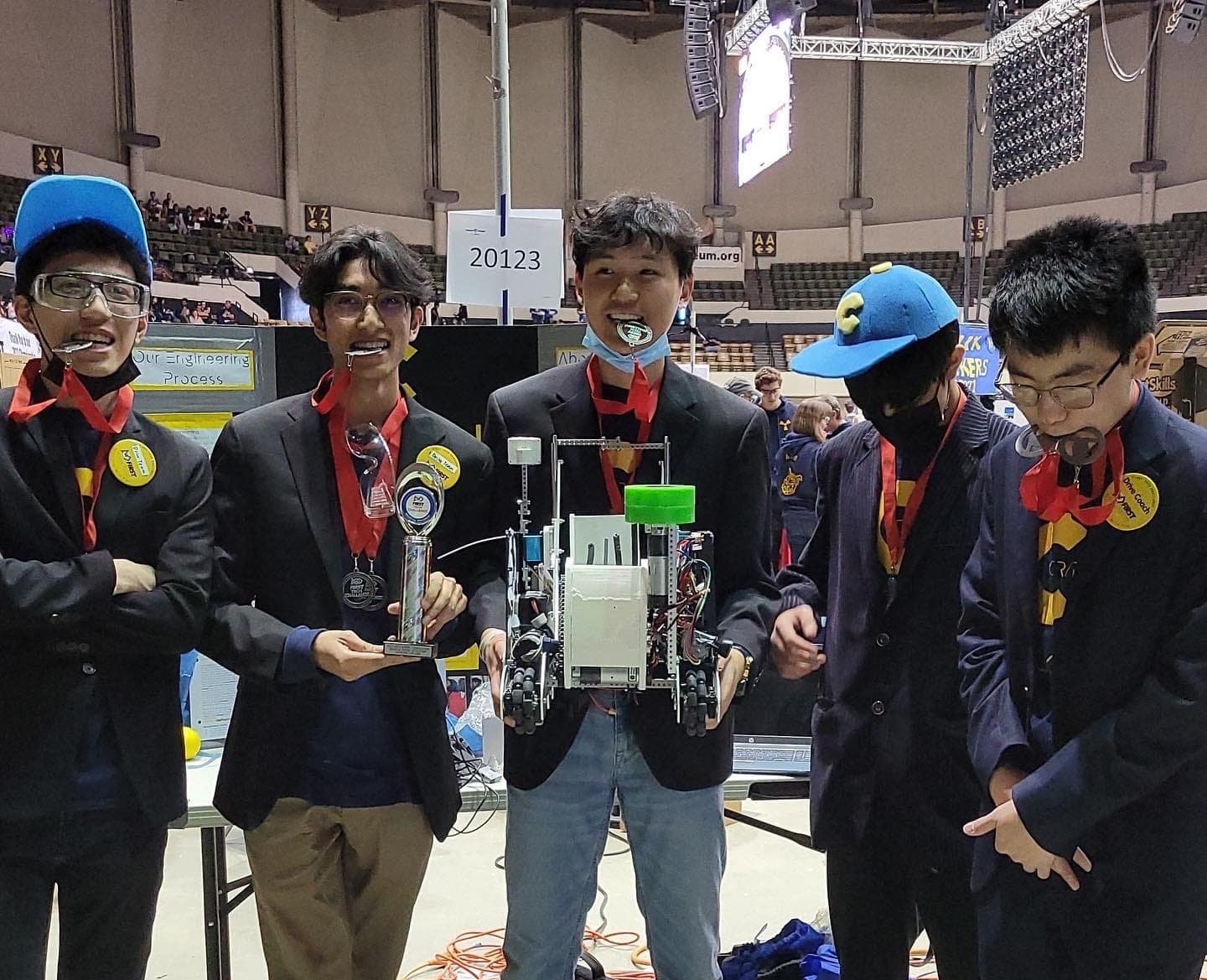
Cryptic #20123 · Centennial Robotics Inc. · World Championship
The Journey
2019–20
Cypher #17464
Builder & Marketer
3rd Place Inspire · State Championship
2020–21
VorTechs #18817
Team Captain
Youngest Captain in Club History · COVID Season
2021–23
Cryptic #20123
Founder & Captain
I joined my high school's robotics program in 2019 as a freshman, selected for Cypher #17464, a brand-new rookie FTC team. In that first season I built the H-chassis, handled competition robot maintenance, and led outreach and marketing — including a stop-motion promotional video for FIRST. We placed 3rd in the Inspire Award and earned a spot at the State Championship. The following year I was elected captain of a new team, VorTechs #18817, becoming the youngest captain in the club's history as a sophomore. COVID hit, and I hosted the entire team's workspace, workshops, and operations from my own resources through the lockdown season.
When our school revised county legislation, blocked our grant access, prevented community outreach, and copyrighted our team's branding, I treated it as a founding moment. I established Centennial Robotics Inc., a 501(c)3 nonprofit organization — entirely student-operated from governance to finances — and became its president, overseeing 50+ members across multiple teams. Under Centennial Robotics, I captained our flagship program: FTC Team Cryptic #20123. Over two full competitive seasons, I led a team of 20+ members through every dimension of the FIRST Tech Challenge: robot design, build, software, documentation, sponsorship, and outreach. Both seasons ended at the State Championship. The second ended at the World Championship in Houston, Texas.
On the engineering side, I implemented OpenCV computer vision pipelines — using YCbCr colorspace to eliminate glare interference — for real-time signal detection, coded PID and IMU-fused autonomous routines across multiple trajectory paths, designed and built robots in SolidWorks and OnShape with custom CNC-milled chassis plates and 3D-printed components, and programmed single-button teleop automation sequences that collapsed complex multi-step scoring into one driver input. Since graduating, Cryptic has continued to rise — placing among the world's top few FTC programs. I remain involved as Advising Chair.
The Robots
Two competitive seasons on Cryptic — each game required a fundamentally different robot architecture.
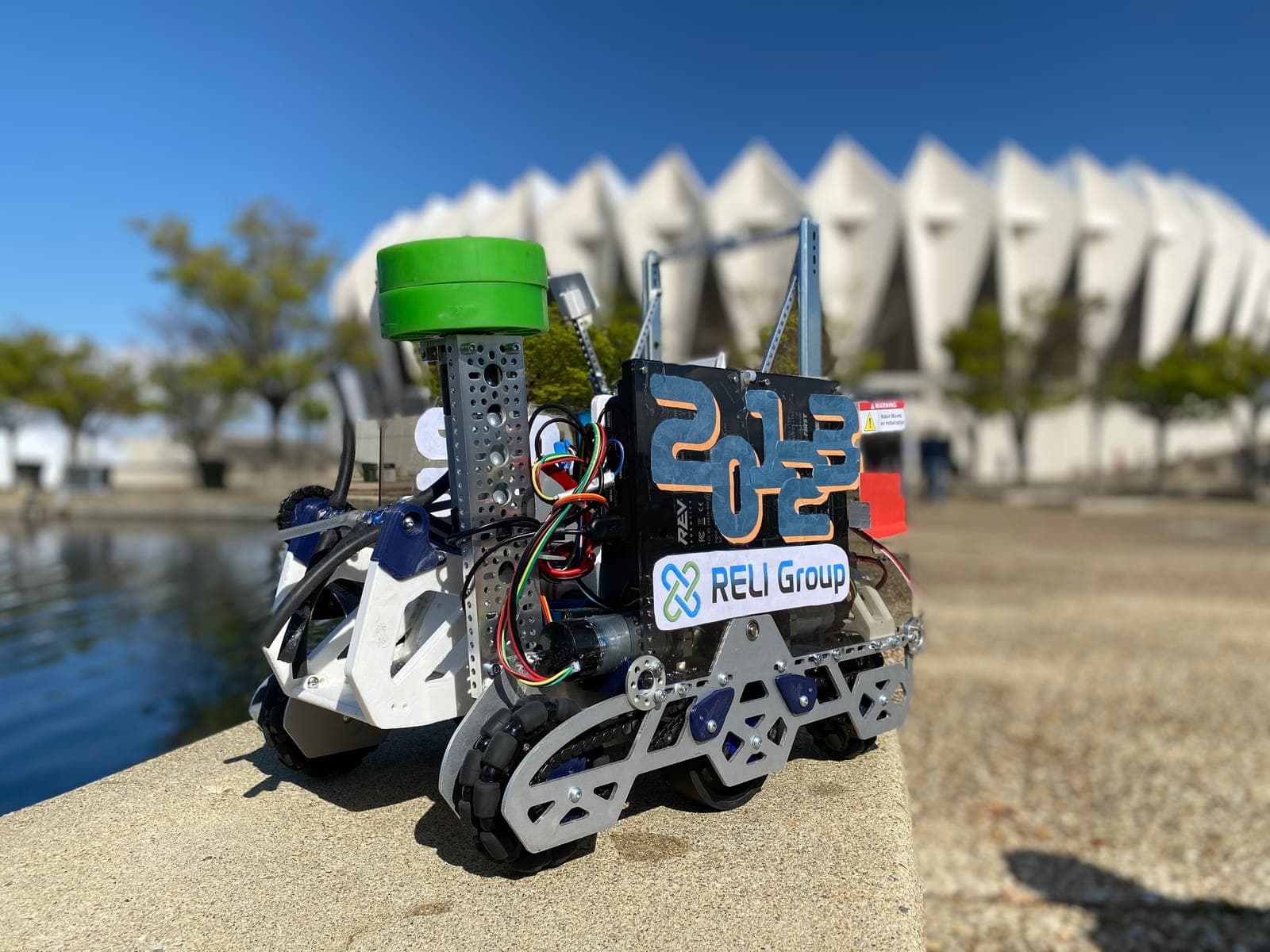
Season 01 · 2021–22 · Freight Frenzy
Freight Frenzy Robot
The game required delivering freight into a tiered shipping hub and spinning a duck wheel during autonomous. The robot was built around traversing field barriers without losing game pieces — a constraint that drove every design decision.
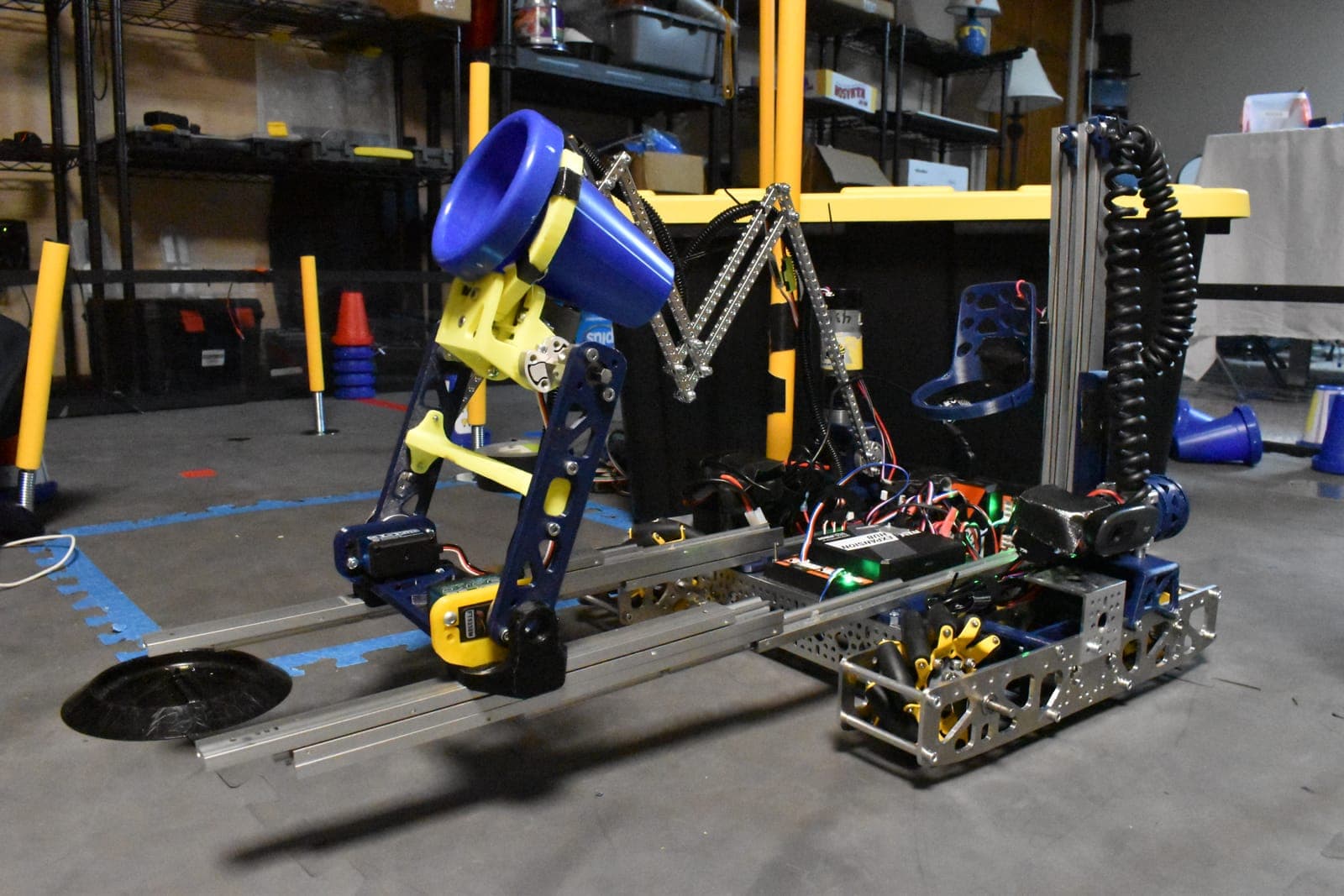
Season 02 · 2022–23 · Power Play
Power Play Robot
The game required stacking cones on junction poles at varying heights. The field was heavily congested with obstacles, making movement costly. The strategic decision was to build a stationary robot — never leaving the scoring zone — using extended reach mechanisms to intake from the alliance substation and score without repositioning.
Technical Breakdown
The engineering stack across four years — from computer vision pipelines and PID control loops to CAD-first robot design and custom manufacturing.
01
Computer Vision & Signal Detection
Implemented OpenCV computer vision pipelines in Java using the FTC SDK for real-time signal detection in the Power Play season. The pipeline operated in YCbCr colorspace rather than standard RGB — separating luminance from color information so that variable competition lighting and floor glare couldn't corrupt the detection. The pipeline extracted color values from defined regions of interest in the camera frame to classify the custom signal sleeve and autonomously determine the correct parking zone before the driver control period. Built on earlier experience implementing TensorFlow-based object detection for game element classification.
02
PID Control, Odometry & Autonomous Routines
Programmed multi-path autonomous routines using a layered control stack: PID controllers for precise positioning and heading correction, IMU sensor fusion for orientation tracking, and trajectory sequencing using displacement, spline, and lineTo methods from the Road Runner library. Coded regression-based odometric models — multi-linear, polynomial, and ridge regression — on encoder data to track robot position on the field. Multiple autonomous paths were developed each season to maximize strategic flexibility: if our path conflicted with an alliance partner's trajectory, we switched paths to avoid penalties and maximize combined score. In Power Play, our autonomous routine was designed to score 80 points independently.
03
Mechanical Design & Custom Manufacturing
All robots were designed CAD-first in SolidWorks, Fusion360, and OnShape before any physical build began. Where standard commercial parts couldn't meet design requirements — custom side plates, intake geometry, linkage components — they were manufactured in-house using 3D printing for rapid iteration and CNC milling for structural components. In the second season, the team built their own CNC mill from scratch to further reduce manufacturing costs. The slider-crank linkage outtake in Freight Frenzy and the M-beam double four-bar arm in Power Play were both designed and validated in CAD before fabrication, reducing rebuild cycles and part waste.
04
Teleop Automation & IMU-Triggered Safety Systems
Both seasons featured "everything button" automation systems that collapsed multi-step robot operations into a single driver input — eliminating human error from the most error-prone part of the match. The Freight Frenzy automation handled the full freight transport sequence in a defined state machine; the Power Play automation covered the complete cone intake-to-score cycle. Both also implemented passive IMU-triggered safety behaviors: in Freight Frenzy, the robot detected barrier traversal and automatically closed the container lid to retain freight; in Power Play, the robot detected rapid rotation and automatically locked the horizontal slides to prevent them from flinging into field elements or alliance robots.
Outreach & Impact
Cryptic wasn't just a competition team — it was the most active STEM outreach program in Howard County.
Community · Ongoing
Howard County Library System
In partnership with the Howard County Library System, Cryptic hosted the "Taking Your FIRST Steps in STEM" event series across the Miller Branch, Central Branch, and Elkridge Branch libraries. Activities included Build-a-Boat engineering challenges, block coding workshops, Rube Goldberg machine design, and race car building. In the summer of 2022, team members taught two three-week CAD workshops using OnShape — creating a full curriculum, leading participants through a complete boat design project, and 3D printing every participant's finished model for them to keep.
Team Creation · 2022
HoCo Hazards #22742
When outreach participants wanted to compete in FTC but had no path in, members of Cryptic founded HoCo Hazards #22742 — a completely free public FTC team for Howard County, formed in direct partnership with the Howard County Library System. Over 40 people applied; 15 were accepted. Cryptic members ran bi-weekly training sessions covering building, programming, and design for students with no prior STEM exposure. The club drew so much interest that three FTC robotics summer camps were subsequently organized, with two additional teams planned to absorb remaining demand.
Maryland STEM Festival · Annual
State & National Events
Cryptic presented at the Maryland STEM Festival, displaying a custom robotic arm capable of mirroring human movement and hosting engineering workshops for FLL teams. The team also volunteered at FTC qualifiers — queuing teams, managing fields, and building relationships with other regional programs. Internationally, Cryptic connected with Team RobotBirds in Greece for cross-border robot design discussions. Locally, Cryptic hosted an Alumni Day with senior retired teams including Team VIRUS and Exponential, and ran scrimmages with teams Epsilon and Robot in Pieces to improve design under match conditions.
Washington DC · 2022
National Advocacy Conference — US Senate
In a standout moment beyond the competition field, members of Cryptic attended the three-day National Advocacy Conference in Washington, DC to advocate for increased federal STEM funding under Title IV, Part A of the Every Student Succeeds Act (ESSA). On day three, the team met directly with Senator Ben Cardin, Senator Van Hollen, and Representative John Sarbanes — presenting the case for continued STEM program investment and successfully advocating for their continued support of ESSA funding that flows to FIRST programs and beyond.
Awards & Recognition
Regional Championship
2x — Cryptic 21/22 and 22/23
State Championship
2x — both Cryptic seasons · 2021–22 and 2022–23
Top 10 Mid-Atlantic
FTC Cryptic #20123 · overall regional ranking
Inspire Award — 1st Place
Highest award in FTC — judges overall excellence across all dimensions
Inspire Award
4x total (additional placements across both seasons and earlier teams)
Design Award
5x+ — engineering design quality, documentation, and CAD presentation
Innovate Award
3x+ — novel engineering solutions and creative problem-solving
Connect Award
2x+ — community engagement and professional networking
Dean's List
2x — individual recognition for leadership and community impact
State Championship Qualification
Cypher #17464 — 3rd Place Inspire, rookie year 2019–20
Since graduating, Cryptic has continued to climb — placing among the world's top few FTC programs and making it to the world championship competition in Houston, TX since. I remain connected as Advising Chair.
Sponsors & Partners
2021–22 and 2022–23 seasons · Centennial Robotics Inc. tax-exempt nonprofit
Cryptic Robotics
External · FTC Team Website
Cryptic #20123
crypticrobotics.weebly.com
The full Cryptic Robotics website covering both competitive seasons in detail — engineering documentation, season results, competition photos, outreach events, and the full story of the team I founded under Centennial Robotics Inc. The team has continued to compete and grow since my graduation, now ranking among the world's top FTC programs.
Engineering Portfolios
Full season engineering documentation submitted to competition judges — the documentation that drove the Design Award recognition across both seasons.
Freight Frenzy · 2021–22
Engineering Portfolio — Season 1
Full season documentation: 6-wheel drivetrain design rationale, surgical tube intake iteration, slider-crank outtake development, 3 autonomous paths, everything-button automation, and outreach programs.
Power Play · 2022–23
Engineering Portfolio — Season 2
Full season documentation: mecanum chassis, horizontal slide intake, OpenCV YCbCr vision pipeline, PID + IMU autonomous (80 pts planned), automation button sequence, HoCo Hazards mentorship, CAD workshops, and NAC conference.
Gallery
CAD renders, competition photos, and the build seasons of Cryptic #20123.
FTC Cryptic #20123 · 2021–22 Freight Frenzy · 2022–23 Power Play · Centennial Robotics Inc.